
Geographical and Political Overview of Georgia
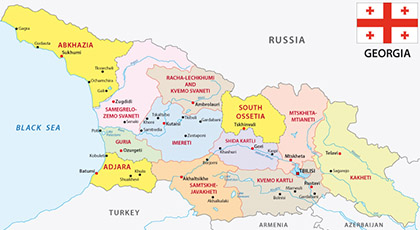
Georgia is located at the crossroads of Europe and Asia, specifically in the Caucasus region. It is bordered by the Black Sea to the west, the Russian Federation to the north, Azerbaijan to the southeast, and Armenia and Turkey to the south. Georgia covers an area of 69,700 square kilometers and has a population of approximately 5 million people.
The capital of Georgia is Tbilisi. The country is a unified, parliamentary republic, with its government elected through a democratic process.
Georgia is a member of several international organizations, including the Black Sea Economic Cooperation Organization, the Council of Europe, and the Organization for Security and Co-operation in Europe. It also aspires to join NATO and the European Union.
During antiquity, many small kingdoms were established in the region that is now Georgia. Among them, the Kingdom of Colchis and the Kingdom of Iberia converted to Christianity in the early 4th century, making Georgia one of the first countries to adopt Christianity as a state religion.
The Georgian alphabet, created in the 3rd century BCE, is one of only 14 unique writing systems in the world.
The Kingdom of Georgia reached its peak of political and economic power during the reigns of King David IV the Builder and Queen Tamar in the 11th and 12th centuries, a period often referred to as Georgia’s "Golden Age."
In the 18th century, Eastern Georgia (the Kingdom of Kartli-Kakheti) signed a treaty with the Russian Empire for protection, but in 1801 it was annexed by Russia. After a brief period of independence following World War I, Georgia was invaded by the Russian Red Army in 1921 and incorporated into the Soviet Union.
Since gaining independence in 1991, Georgia experienced civil unrest and a severe economic downturn that lasted nearly eleven years. However, following the Rose Revolution in 2003, the new government introduced significant democratic and economic reforms, setting the country on a path of modernization.
Georgia, known as the "Land of Georgians," derives its name from Kartli, one of the key historical and geographical regions of the country.
The European name "Georgia" emerged during the medieval period and is believed to reference Saint George, a figure deeply revered in Georgian tradition.
The people of Georgia are called "Kartvelebi," and their language is known as "Kartuli." The root of the term "Kartvel" refers to inhabitants of Kartli or ancient Iberia, as documented in Roman Empire records.
In ancient times, Greek and Roman sources referred to the western inhabitants of Georgia as Colchians and the eastern population as Iberians.
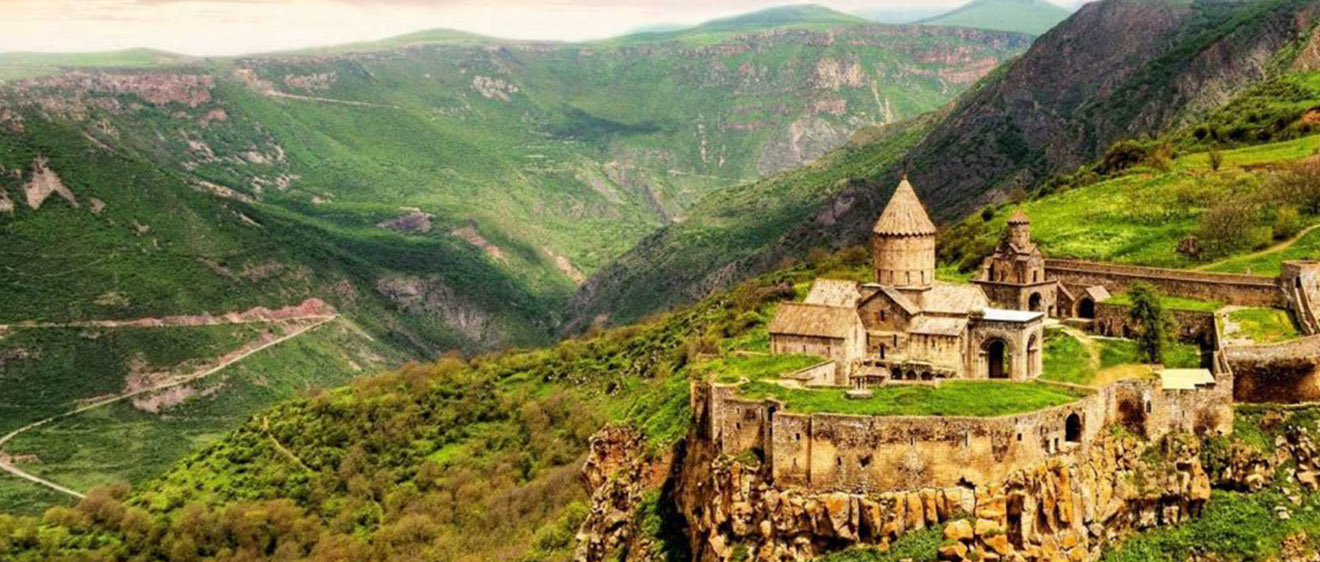
Georgia is located at the crossroads of Europe and Asia, positioned between Russia and Turkey on the eastern shore of the Black Sea. Its geographical placement is sometimes classified as part of Eastern Europe, while others consider it a transcontinental country straddling Europe and Asia.
The country spans an area of 69,700 square kilometers, with 87% of its territory covered by mountains and semi-mountainous regions. The northern border, formed by the southern slopes of the Greater Caucasus, connects Georgia and Russia through the Rikoti Tunnel.
To the south lie the Lesser Caucasus and the Armenian Plateau. Historically, western Georgia was known as Colchis, while the eastern region was referred to as Iberia.
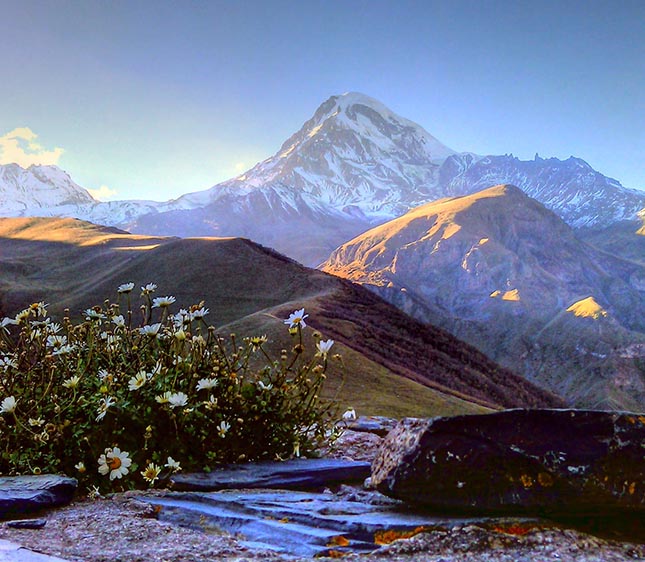
The remote Svaneti region, located in the northern part of the country, is isolated from the rest of Georgia by the imposing Caucasus Mountains.
The Colchis Plain lies between two major mountain ranges in Georgia. It is bordered to the west by Kvemo Kartli and Shida Kartli and from north to south by the Likhi Range. The highest peak in Georgia is Mount Shkhara, standing at 5,068 meters. The longest river is the Mtkvari (Kura), stretching 1,364 kilometers, while the largest lake is Paravani, covering 37.5 square kilometers. Georgia is also home to Voronia (Kruber) Cave, the deepest cave in the world, with a depth of 2,197 meters.
The Autonomous Republic of Abkhazia is located in the northwest, while the Autonomous Republic of Adjara is in the southwest. The South Ossetia region lies to the north.
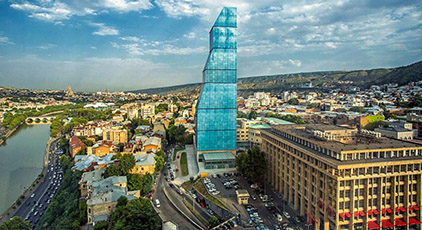
Georgia’s major cities include Tbilisi, the capital, with a population of 1,473,551; Kutaisi with 200,611 inhabitants; Batumi with 190,405; and Rustavi with 122,900 residents.
Georgia is a parliamentary republic where presidential elections are held every five years. Legislative power is vested in the Parliament.

